Jackson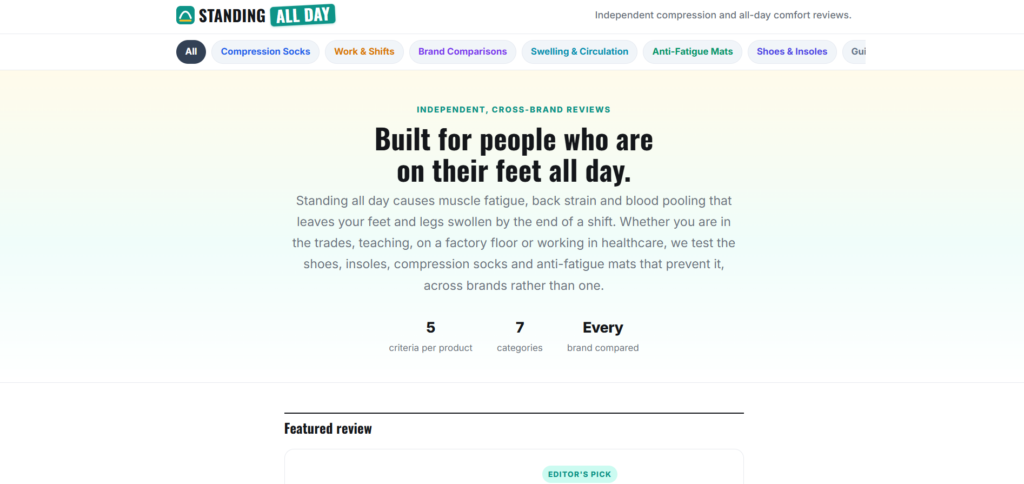
Spending long hours on your feet can be challenging. Whether you work in healthcare, retail, hospitality, construction, education, or another profession that requires constant standing, your feet and legs can experience significant pressure throughout the day. This is where StandingAllDay.com can be a useful resource for people looking for practical ways to improve comfort while spending extended periods standing.
Why Standing All Day Can Be Difficult
Standing for several hours may seem easier than sitting at a desk, but it places continuous stress on the feet, ankles, knees, and lower back. Unlike walking, standing in one position gives your muscles fewer opportunities to relax.
Over time, people who stand for long periods may experience:
- Tired or aching feet
- Swollen ankles
- Leg discomfort
- Lower back soreness
- Heel pain
- Muscle fatigue
- General body stiffness
Finding ways to reduce this discomfort can make a significant difference in how you feel at the end of a workday.
How StandingAllDay.com Can Help
StandingAllDay.com is a keyword that naturally fits content focused on comfort, foot support, workplace wellness, and strategies for people who spend much of their day standing.
A useful approach is to look at several factors rather than relying on a single solution. Proper footwear, supportive surfaces, regular movement, and healthy work habits can all contribute to better comfort.
Choose Supportive Footwear
One of the most important considerations for anyone standing all day is footwear. Shoes should provide adequate cushioning and support without being unnecessarily heavy or restrictive.
Look for shoes that offer:
- Good arch support
- Adequate cushioning
- A comfortable toe box
- Stable soles
- Proper sizing
Wearing shoes that are too tight or lack sufficient support can make foot fatigue worse. Replacing worn-out footwear is also important because cushioning and structural support can decrease with regular use.
Consider an Anti-Fatigue Mat
For people who stand in one place at work, an anti-fatigue mat can provide another layer of comfort. These mats are commonly used at retail counters, kitchen workstations, factories, laboratories, and service desks.
A supportive mat can reduce the hardness of the surface beneath your feet and encourage subtle changes in posture. However, it should not replace comfortable footwear or regular movement.
Keep Moving When Possible
Standing in exactly the same position for hours can be more uncomfortable than occasionally moving around. If your job allows it, take short walking breaks or shift your position throughout the day.
Simple movements such as gently flexing your ankles, changing your stance, or walking for a few minutes can help prevent your body from feeling stiff.
Even small changes can be useful when repeated throughout a long shift.
Pay Attention to Your Posture
Good posture matters when you’re standing for extended periods. Try to avoid locking your knees, leaning heavily to one side, or constantly placing your weight on the same leg.
Keep your shoulders relaxed and distribute your weight reasonably evenly between both feet. If your workstation can be adjusted, position equipment and frequently used items so you don’t have to bend or reach unnecessarily.
Compression Support May Be Useful
Some people who spend long periods standing choose compression stockings to support their legs. Compression garments apply graduated pressure to the legs and are commonly used by people who experience leg heaviness or swelling.
The appropriate compression level depends on the individual and the reason for wearing them. If you have an underlying medical condition or significant swelling, it is best to speak with a healthcare professional before choosing compression garments.
Don’t Ignore Persistent Pain
Occasional tiredness after a long shift is common, but persistent or severe pain should not simply be ignored. Foot, leg, knee, or back discomfort that continues despite changes to footwear and working habits may require professional evaluation.
Sudden swelling, significant pain, numbness, weakness, or other concerning symptoms should also be discussed with a qualified healthcare professional.
Create a Better Standing Routine
People who regularly work on their feet can benefit from creating a simple daily routine. Start with comfortable footwear, make adjustments to your workstation, move whenever possible, and give your feet time to recover after work.
At home, relaxing your legs, changing out of work shoes, and performing gentle stretches may help you transition out of a long workday.
Final Thoughts
Standing all day doesn’t have to mean accepting constant discomfort. Small improvements in footwear, posture, movement, workplace setup, and recovery can make long shifts easier to manage.
For people searching for practical information about spending long periods on their feet, StandingAllDay.com provides a natural focus for content centered on comfort and everyday standing challenges. The key is to pay attention to your body’s needs and make practical adjustments before minor discomfort becomes a persistent problem.