
 Jackson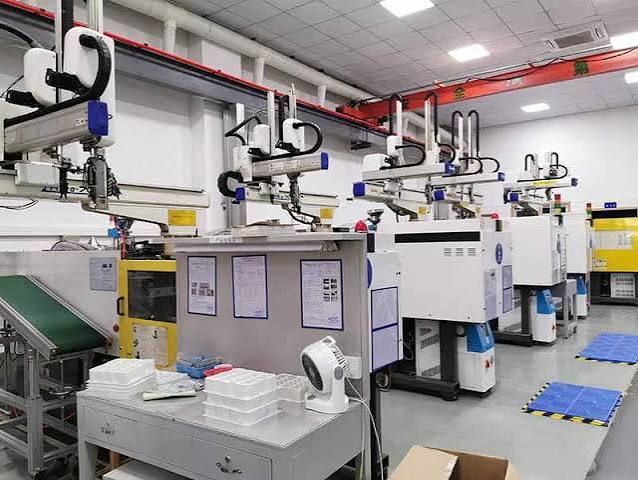
Manufacturing industries constantly seek efficient, reliable, and cost-effective methods for producing high-quality components. Among the many available manufacturing Injection Molding Service techniques, an Injection Molding Service has become one of the most widely used solutions for producing plastic parts in large quantities. This process combines precision, speed, repeatability, and design flexibility, making it suitable for industries ranging from automotive and electronics to medical equipment and consumer products.
Injection molding involves melting plastic material and injecting it into a specially designed mold under controlled pressure. Once the material cools and solidifies, the finished component is removed from the mold. This straightforward concept can produce highly detailed parts with consistent dimensions and excellent surface finishes.
What Is an Injection Molding Service?
An Injection Molding Service provides professional manufacturing capabilities for creating plastic components according to specific designs and technical requirements. The process begins with the development of a mold based on the desired shape of the product. Plastic pellets are then heated until they become molten and are injected into the mold cavity.
After cooling, the molded part is ejected, inspected, and prepared for additional processing or assembly when required. Depending on the project, manufacturers may offer services such as mold design, prototyping, material selection, production molding, quality inspection, and finishing.
Modern injection molding equipment can operate with advanced automation and computer-controlled systems. These technologies help manufacturers maintain accuracy and consistency throughout production while reducing material waste and manual intervention.
Major Benefits of Injection Molding
One of the biggest advantages of injection molding is its ability to support high-volume production. Once the mold has been developed and tested, manufacturers can produce thousands or even millions of identical parts efficiently. This makes the process particularly valuable for products that require large production runs.
Another important benefit is excellent repeatability. Every production cycle can create parts with highly consistent dimensions, shapes, and specifications. This consistency is essential for industries where components must fit together accurately or meet strict quality standards.
Injection molding also provides considerable design flexibility. Manufacturers can create parts with complex shapes, intricate details, thin walls, ribs, holes, and other design features. With appropriate mold engineering, even complicated components can be produced efficiently.
Material efficiency is another key advantage. The process uses controlled quantities of plastic, and modern systems can minimize excess material. Some thermoplastic materials can also be recycled and reused, depending on their composition and production requirements.
Applications Across Different Industries
The versatility of injection molding makes it useful in many sectors. In the automotive industry, it is commonly used to manufacture interior components, dashboards, panels, covers, brackets, clips, and various under-the-hood parts. Lightweight plastic components can also help manufacturers reduce overall vehicle weight.
The electronics industry relies on injection molding for housings, connectors, switches, protective covers, and other components. Precise molding allows manufacturers to create parts that protect sensitive electronic assemblies while maintaining attractive designs.
In the medical sector, injection molding can be used for producing selected medical components, laboratory products, housings, containers, and disposable plastic products. Medical manufacturing requires strict quality control, appropriate materials, and carefully maintained production environments.
Consumer products represent another major application area. Household items, storage containers, toys, kitchen accessories, personal-care products, and many other everyday goods can be manufactured through injection molding.
Packaging companies also benefit from the technology. Caps, closures, containers, and specialized packaging components can be produced quickly and consistently, supporting large-scale commercial production.
Cost-Effectiveness for Large Production Runs
Although creating an injection mold can require a significant initial investment, the cost per part can become highly competitive when production volumes increase. A well-designed mold can be used repeatedly for thousands or millions of cycles, spreading the initial tooling expense across a large number of products.
Automation further improves cost efficiency. Modern molding machines can perform injection, cooling, ejection, and other operations with limited human intervention. This can reduce labor requirements while increasing production speed.
Manufacturers can also optimize production costs by selecting appropriate materials, mold designs, machine settings, and cycle times. These improvements can make injection molding an economical choice for businesses seeking scalable manufacturing.
High Precision and Consistent Quality
Precision is particularly important when components must meet exact specifications. Injection molding machines can control important production parameters such as temperature, pressure, injection speed, and cooling conditions.
Consistent process control helps reduce dimensional variations and manufacturing defects. Quality inspection systems can also identify problems before products reach customers. Depending on the application, manufacturers may perform dimensional inspections, visual checks, material testing, and other quality-control procedures.
This combination of controlled production and inspection allows businesses to maintain reliable product quality throughout large manufacturing runs.
Design and Material Flexibility
Injection molding supports a wide variety of thermoplastic materials, each offering different characteristics. Depending on the product requirements, manufacturers can select materials based on properties such as strength, flexibility, heat resistance, chemical resistance, durability, or appearance.
The process also supports different surface finishes and colors. Designers can incorporate textures, logos, branding elements, and functional features directly into the mold in many applications. This reduces the need for additional finishing operations and can improve the overall appearance of the final product.
Faster Production and Scalability
Speed is another significant manufacturing advantage. Once a mold and production process have been properly established, individual molding cycles can often be completed quickly. This enables manufacturers to produce large quantities within relatively short timeframes.
The same production concept can also be scaled to meet changing demand. Businesses may begin with moderate production volumes and increase output as market demand grows. Multiple machines or molds can be introduced when additional capacity is required.
Reduced Material Waste
Efficient material usage is an important consideration for modern manufacturing. Injection molding delivers molten plastic directly into the mold cavity, allowing manufacturers to control the amount of material used for each component.
Proper mold design and process optimization can reduce unnecessary waste. In suitable applications, certain leftover thermoplastic material can be processed for recycling or reuse, helping manufacturers improve resource efficiency.
Choosing the Right Injection Molding Partner
Selecting an experienced manufacturing partner is essential for achieving reliable results. Businesses should consider factors such as equipment capabilities, mold design expertise, material knowledge, production capacity, quality-control systems, and delivery timelines.
A capable Injection Molding Service provider should understand the complete manufacturing process rather than simply operating molding machinery. Design-for-manufacturing guidance can help identify potential problems before tooling begins, reducing costly modifications later.
Communication is also important. Clear technical specifications, product drawings, material requirements, quality standards, and production expectations help ensure that the final components meet the intended requirements.
Conclusion
An Injection Molding Service offers an effective combination of precision, efficiency, scalability, and design flexibility. From automotive and electronics components to consumer products, packaging, and selected medical applications, injection molding supports the production of countless plastic products used in everyday life.
Its ability to produce consistent parts at high volumes makes it especially valuable for businesses seeking cost-effective manufacturing. Advanced machinery, automation, material choices, and improved mold technologies continue to expand its capabilities.
By working with a reliable injection molding partner and using well-designed tooling and optimized production processes, manufacturers can achieve high-quality components while controlling production costs and meeting demanding market requirements. As industries continue to prioritize efficiency and product innovation, injection molding remains an important and versatile manufacturing technology.

