Jackson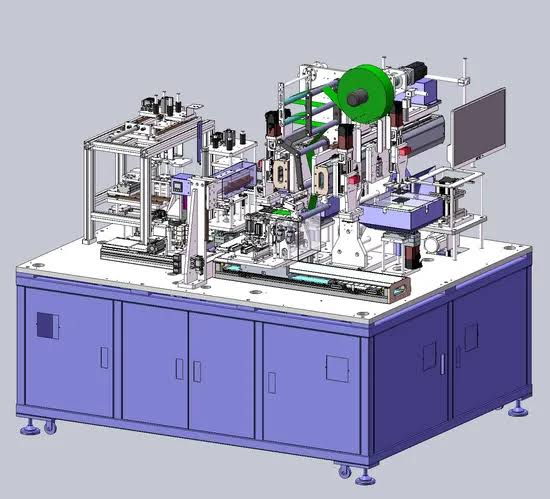
The battery industry is evolving rapidly as demand for electric vehicles, energy storage systems, portable electronics, and renewable energy solutions continues Battery Stacking Machine to grow. Behind every reliable battery is a carefully controlled manufacturing process where precision, consistency, and efficiency are essential. One of the important technologies used in modern battery production is the Battery Stacking Machine.
A Battery Stacking Machine is designed to accurately arrange battery electrode sheets and separator materials into a structured cell assembly. By automating a process that traditionally required significant manual effort, these machines can help manufacturers achieve better consistency, higher productivity, and improved production control.
What Is a Battery Stacking Machine?
A Battery Stacking Machine is specialized equipment used during the assembly stage of battery manufacturing. Its primary function is to stack positive and negative electrode sheets together with separator layers according to a predefined sequence.
The stacking process is particularly important for lithium-ion batteries and other advanced battery technologies. Each layer must be positioned accurately to ensure proper cell performance. Even a small positioning error can affect the quality, capacity, and safety of the finished battery.
Modern machines use automated feeding, alignment, positioning, and stacking mechanisms to create consistent cell structures. Depending on the battery design and production requirements, the equipment can be configured for different cell sizes, materials, and stacking methods.
Why Accurate Battery Stacking Matters
Battery cells contain multiple layers that work together to store and deliver electrical energy. The electrode and separator materials need to maintain precise alignment throughout the assembly process.
Poor alignment can create manufacturing problems, including inconsistent cell dimensions, material waste, reduced performance, and increased quality-control requirements. In some cases, manufacturing defects may also affect battery reliability.
A Battery Stacking Machine helps reduce these risks by controlling the movement and placement of materials. Automated systems can maintain repeatable positioning, which is difficult to achieve consistently through manual operations over long production runs.
Main Features of Modern Battery Stacking Machines
Modern battery stacking equipment can include a variety of technologies designed to improve manufacturing performance.
Automated Material Feeding
Automated feeding systems transport electrode sheets and separator materials into the stacking area. Sensors and controlled mechanisms help ensure that materials arrive at the correct position and timing.
This reduces unnecessary manual handling while maintaining a continuous production workflow.
Precision Alignment
Alignment is one of the most important functions of a stacking system. High-precision positioning mechanisms can place individual layers within carefully controlled tolerances.
Better alignment contributes to more uniform battery cells and can simplify subsequent manufacturing stages.
High-Speed Operation
Battery manufacturers often need to produce large quantities of cells to meet market demand. Automated stacking equipment can perform repetitive operations much faster than manual processes.
High-speed operation can increase production capacity while maintaining consistent stacking patterns.
Vision and Inspection Systems
Some advanced machines incorporate cameras and vision systems to monitor electrode positioning and detect potential errors.
Automated inspection can identify problems during production instead of waiting until the finished cell reaches a later quality-control stage. This can help manufacturers reduce defective output and material losses.
Types of Battery Stacking Methods
Different battery designs require different stacking approaches. The appropriate method depends on cell chemistry, dimensions, electrode structure, and production requirements.
One common approach involves placing individual electrode sheets and separator layers sequentially. Another method uses a continuous separator material while alternating positive and negative electrodes.
Manufacturers may select a stacking technique based on the desired production speed, cell format, and required level of precision. Equipment suppliers can also customize machines to support specific battery designs.
Applications of Battery Stacking Machines
Battery stacking technology is used across several industries where rechargeable energy storage is important.
Electric Vehicles
Electric vehicles require batteries with high energy capacity and reliable performance. Battery manufacturing plants use automated equipment to produce large numbers of cells efficiently.
Accurate stacking is particularly important because battery cells eventually become part of larger modules and battery packs used in vehicles.
Energy Storage Systems
Renewable energy systems often depend on battery storage to balance electricity supply and demand. Large-scale storage installations require many battery cells, creating a strong need for efficient manufacturing processes.
Automated stacking equipment can support the production volumes required for stationary energy storage applications.
Consumer Electronics
Smartphones, laptops, tablets, wearable devices, and other electronic products use compact rechargeable batteries. Manufacturing these small cells requires accurate material handling and precise assembly.
Battery stacking machines can help manufacturers maintain consistency across large quantities of small-format cells.
Industrial Equipment
Rechargeable batteries are also used in industrial tools, robotics, backup systems, and specialized equipment. Consistent cell construction is important when batteries must operate reliably under demanding conditions.
Benefits of Using a Battery Stacking Machine
Automation can provide several benefits throughout the battery manufacturing process.
Improved consistency: Automated movements and positioning can produce more uniform cell assemblies.
Higher productivity: Machines can perform repetitive stacking operations continuously and efficiently.
Reduced labor requirements: Automation reduces the amount of manual work needed for repetitive assembly tasks.
Lower material waste: Precise handling can reduce errors and unnecessary material consumption.
Better process monitoring: Sensors and inspection technologies can provide manufacturers with greater control over production quality.
Scalable production: Automated systems can support manufacturing operations as production requirements increase.
The Role of Software and Automation
Modern Battery Stacking Machines are not simply mechanical systems. Many incorporate sophisticated software, sensors, programmable controls, and data-monitoring capabilities.
Operators can configure production parameters according to the battery design. Automated controls can coordinate material feeding, positioning, stacking, and inspection.
Production data can also help manufacturers identify process irregularities. By monitoring machine performance and production results, manufacturers can make adjustments that improve efficiency and reduce downtime.
As smart manufacturing continues to develop, battery production equipment is increasingly becoming part of connected factory environments where machines communicate with broader manufacturing management systems.
Choosing the Right Battery Stacking Machine
Manufacturers should consider several factors before selecting stacking equipment. Production capacity is an important consideration because the machine needs to match the required output.
Precision is another key factor. Different battery designs may require different positioning tolerances, so manufacturers should evaluate the equipment’s alignment capabilities.
Flexibility can also be valuable. A machine capable of handling multiple battery sizes or production configurations may provide greater long-term usefulness.
Other factors include automation level, inspection capabilities, maintenance requirements, machine footprint, energy consumption, and technical support.
Manufacturers should also consider how easily the equipment can be integrated with other production stages. A well-designed production line allows materials to move smoothly from electrode preparation through cell assembly and subsequent processes.
Maintenance and Production Reliability
Regular maintenance is essential for keeping a Battery Stacking Machine operating efficiently. Components involved in material movement and positioning can experience wear over time.
Routine inspections can help identify mechanical issues before they cause significant production interruptions. Cleaning is also important because dust or material particles can interfere with sensitive components and manufacturing processes.
Manufacturers should follow the equipment supplier’s maintenance recommendations and keep important replacement components available when appropriate.
Proper operator training is equally important. Skilled operators can monitor machine performance, respond to warnings, and perform routine procedures correctly.
The Future of Battery Stacking Technology
Battery technology continues to advance, and manufacturing equipment is evolving alongside it. Future stacking machines are likely to focus increasingly on higher precision, faster production, intelligent inspection, and flexible manufacturing.
Artificial intelligence and advanced vision technologies may enable more sophisticated defect detection and process optimization. Improved automation could also allow machines to adjust production parameters based on real-time manufacturing data.
As demand for energy storage continues to expand, manufacturers will need production systems capable of combining speed with dependable quality. Battery stacking technology will remain an important part of this development.
Conclusion
A Battery Stacking Machine plays a vital role in modern battery cell manufacturing by automating the precise arrangement of electrodes and separator materials. Its ability to improve consistency, productivity, alignment, and process control makes it an important technology for manufacturers producing batteries for electric vehicles, electronics, energy storage, and industrial applications.
As battery demand grows and cell designs become increasingly sophisticated, efficient manufacturing equipment will become even more important. With advances in automation, machine vision, software, and intelligent production systems, Battery Stacking Machines are positioned to support the next generation of high-quality battery manufacturing.